Here’s one of the most challenging projects I worked on this year—and it was entirely due to the poor layout of this small apartment, which was far from what it should have been.
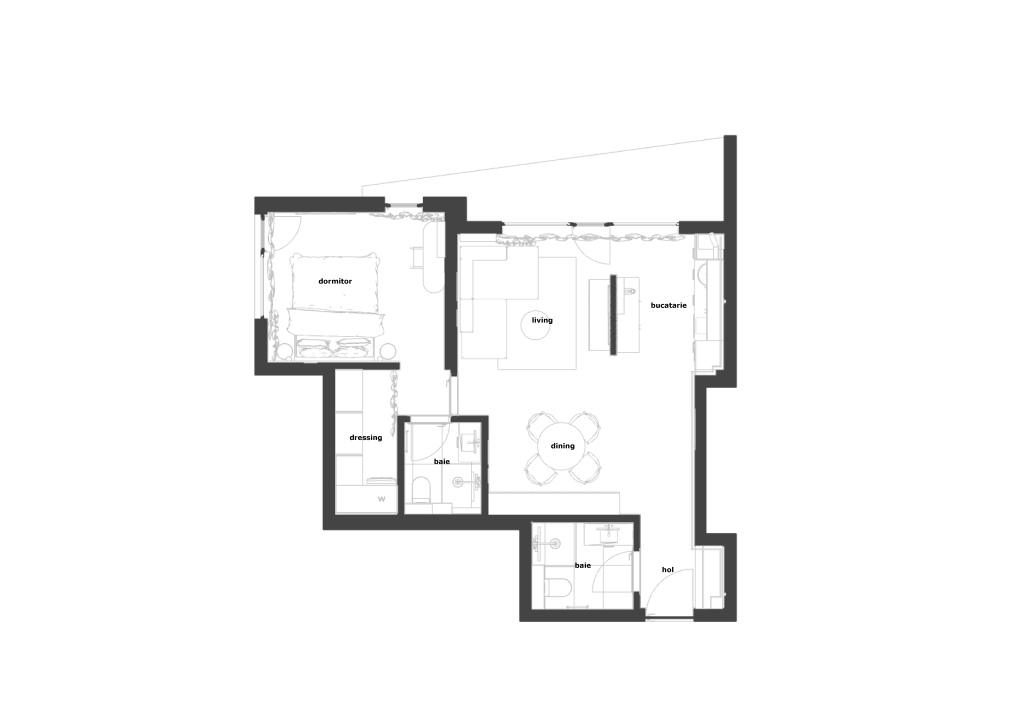
Below you can see the after and before of the floor plan. A small apartment in a newly built building, intended for short-term rental but also suitable for long-term rental (which meant it required enough storage spaces and a correct functional flow).
So, what were the main issues with the initial layout?
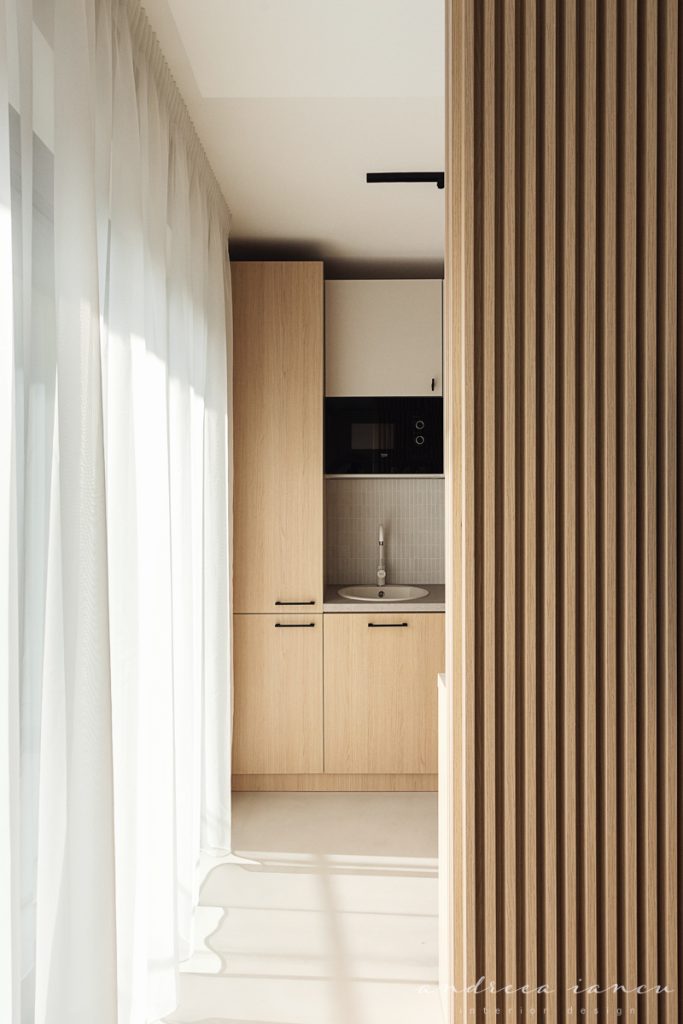
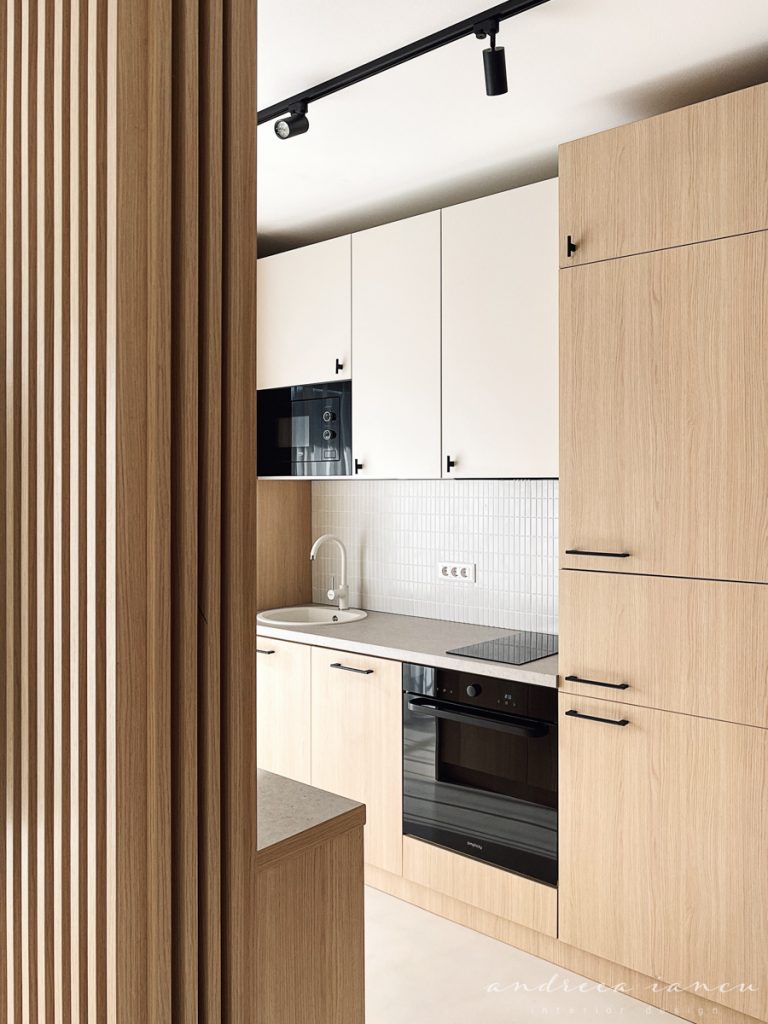
- Very, very small kitchen. More exactly, 290 cm of kitchen length, out of which around 60 cm were occupied by the gas boiler. That left just 230 cm to fit a fridge, sink, dishwasher, hob, oven and still have some usable work surface. And all these while respecting the minimum requirements for safe distances between appliances.
- Oversized area designated for the dining table. The proposed table could seat up to 8 persons, which was unnecessary in such a small apartment likely to be occupied by a couple, or at most a couple with a baby. As a result, the table took up too much of a space that was badly needed elsewhere.
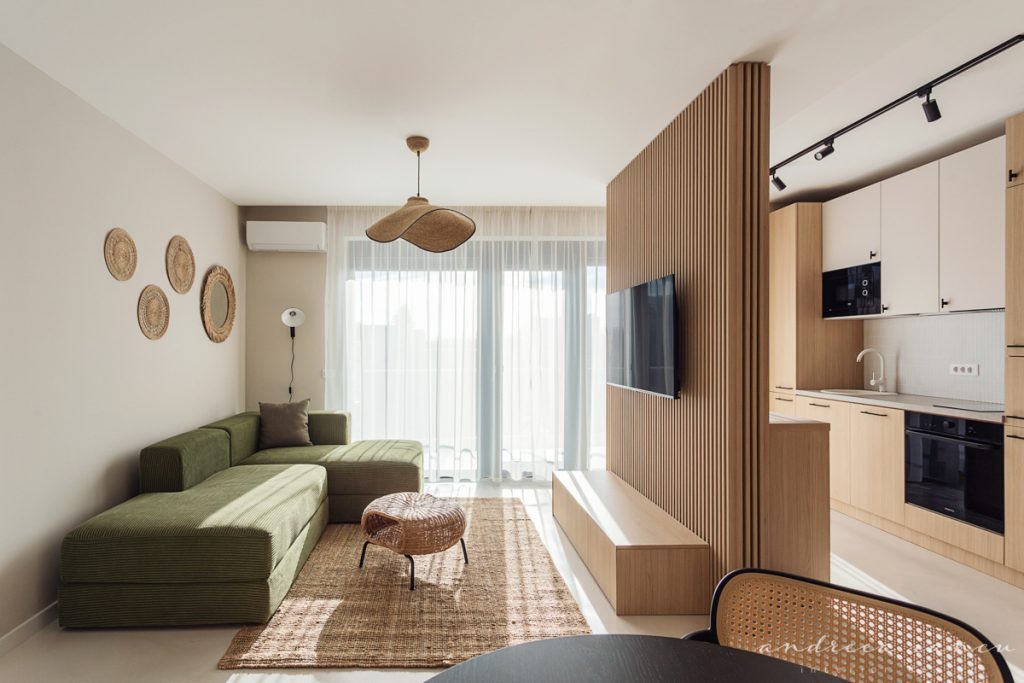
- The sofa and TV area were cramped, disrupting circulation and interrupting the natural flow from the entrance hallway to the bedroom area.
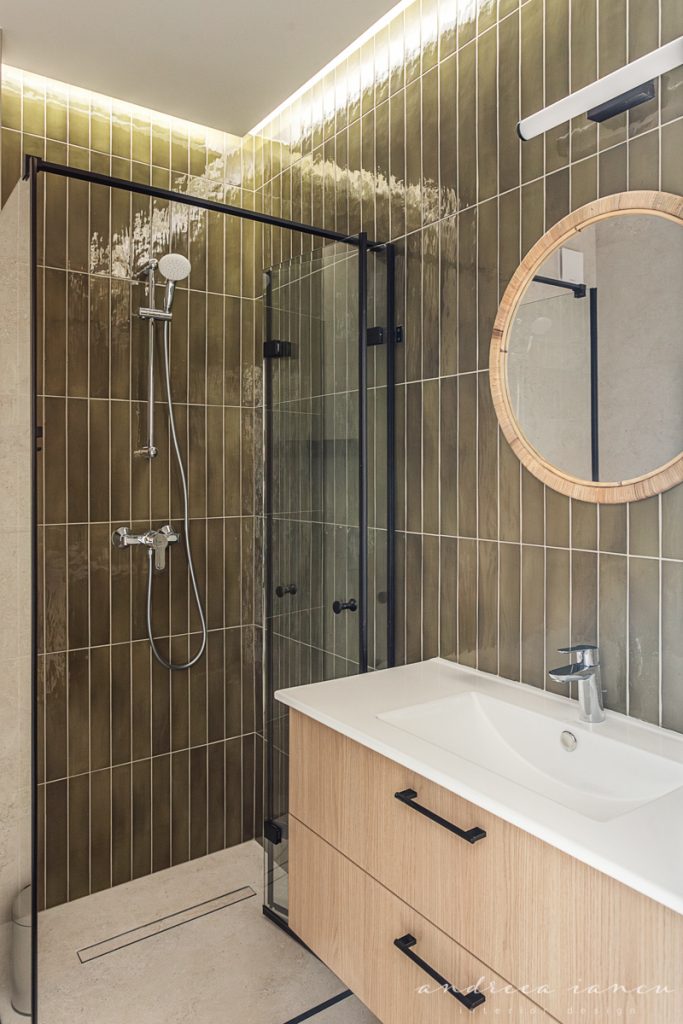
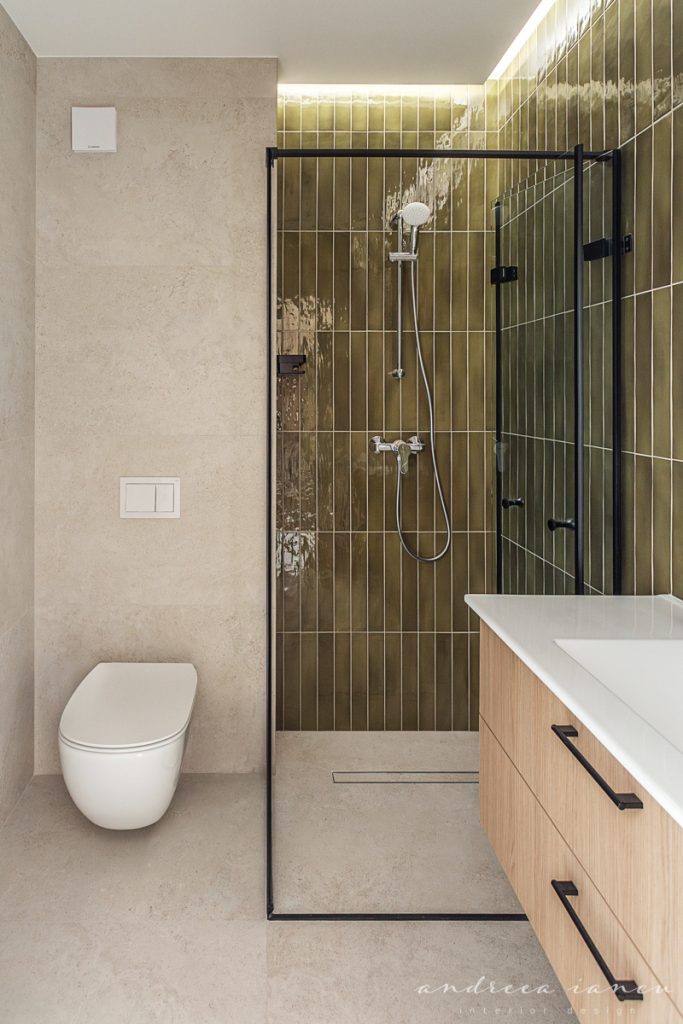
- Bedroom, dressing and bathrooms were okay given the circumstances, plus there wasn’t much we could do about them anyway.
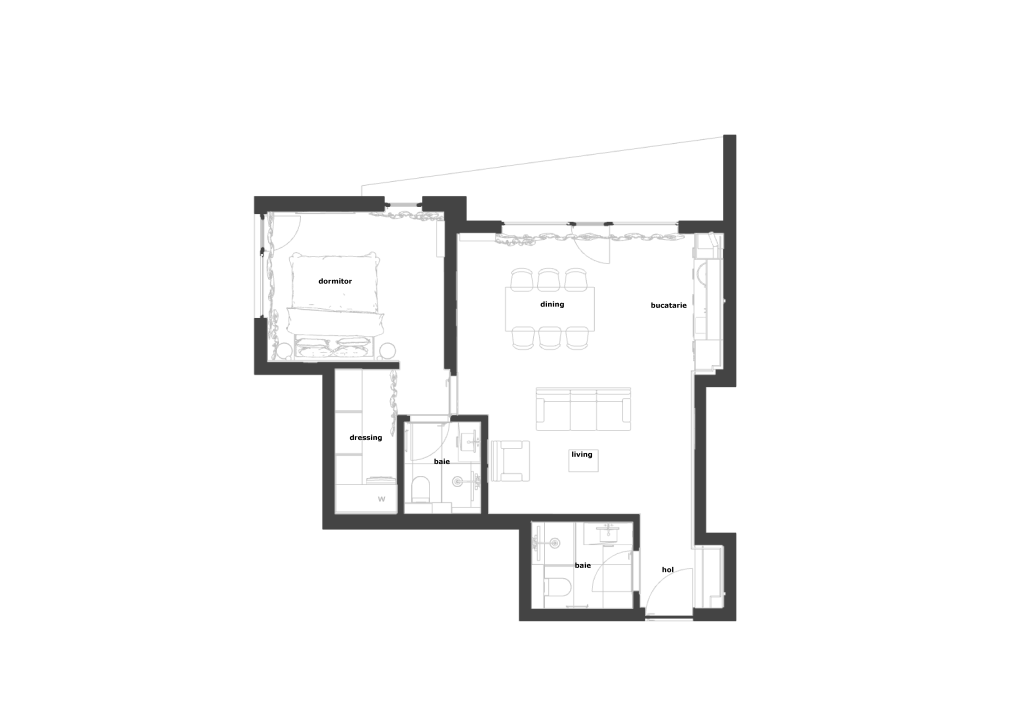
How did we address these issues?
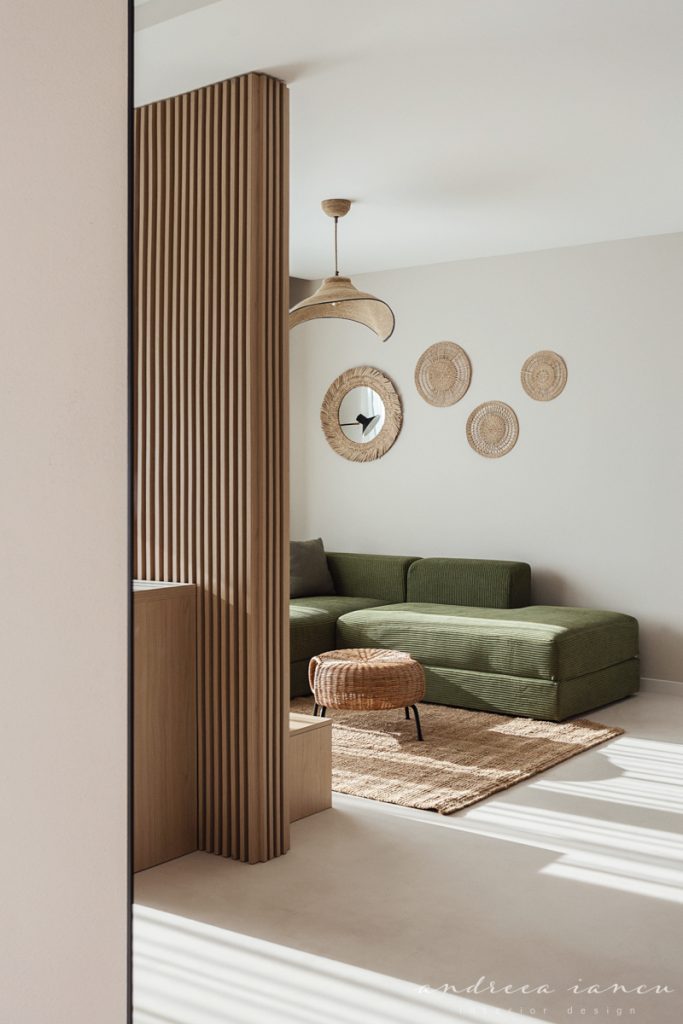
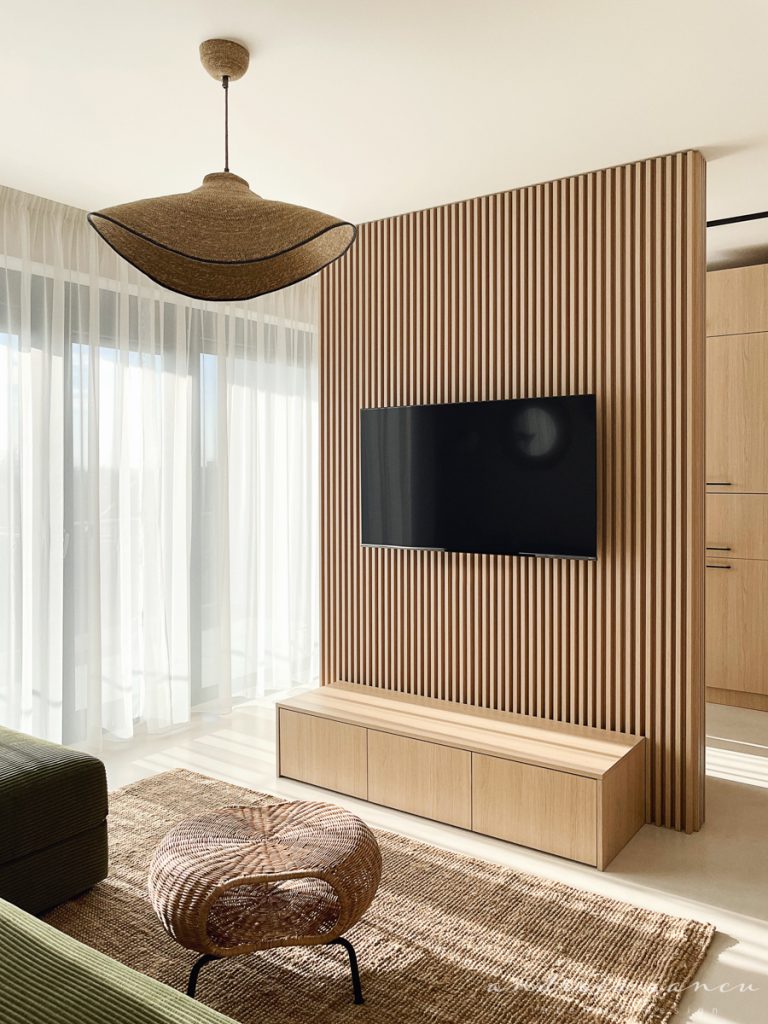
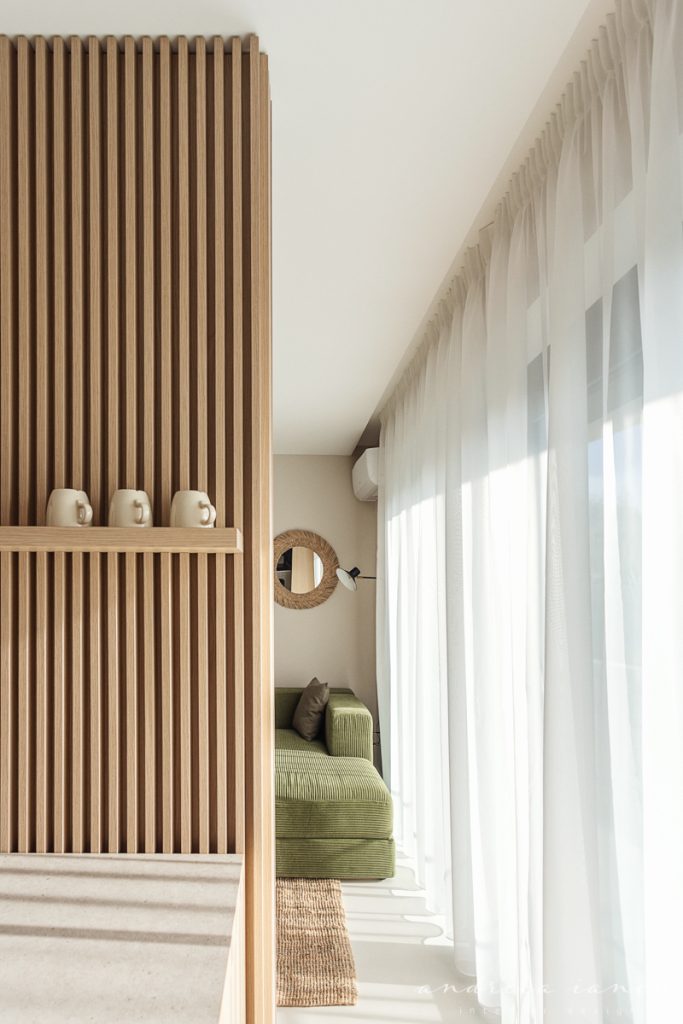
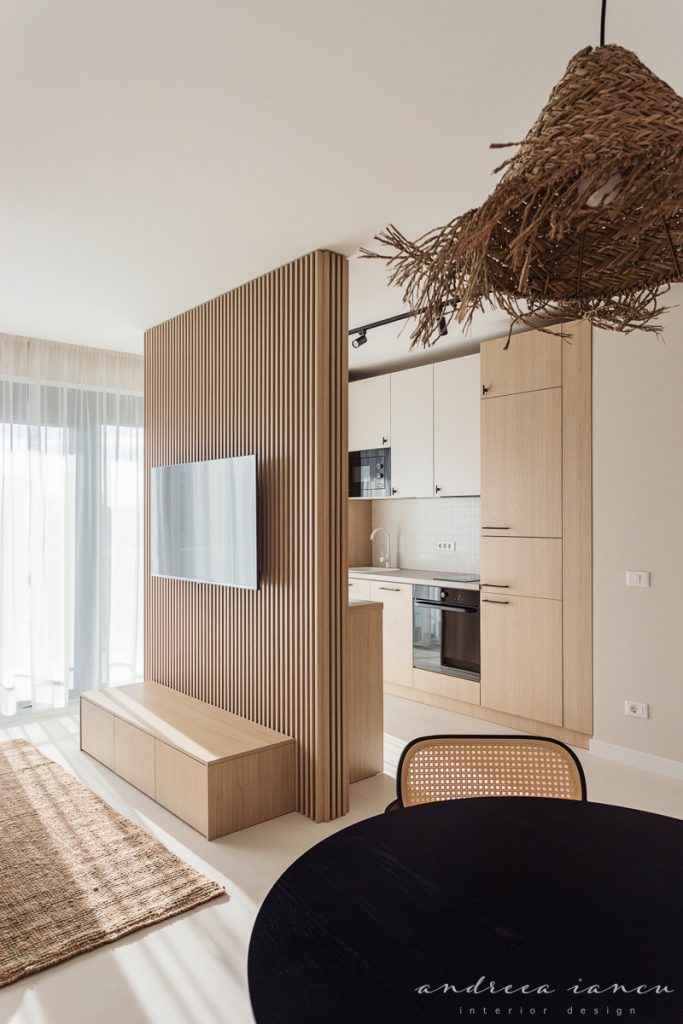
- First, we swapped the dining table location with the sofa area, which led to the idea of building a partial wall between the TV and kitchen zones. This wall serves as a TV and media unit, acts as a visual separator between the two spaces, and provides support for an extra kitchen countertop and storage. Therefore, we placed the main appliances in the initial kitchen nook (still, we could only use a 2-burner hob), while additional storage and work surface were added through a secondary unit that also accommodates a coffee machine.
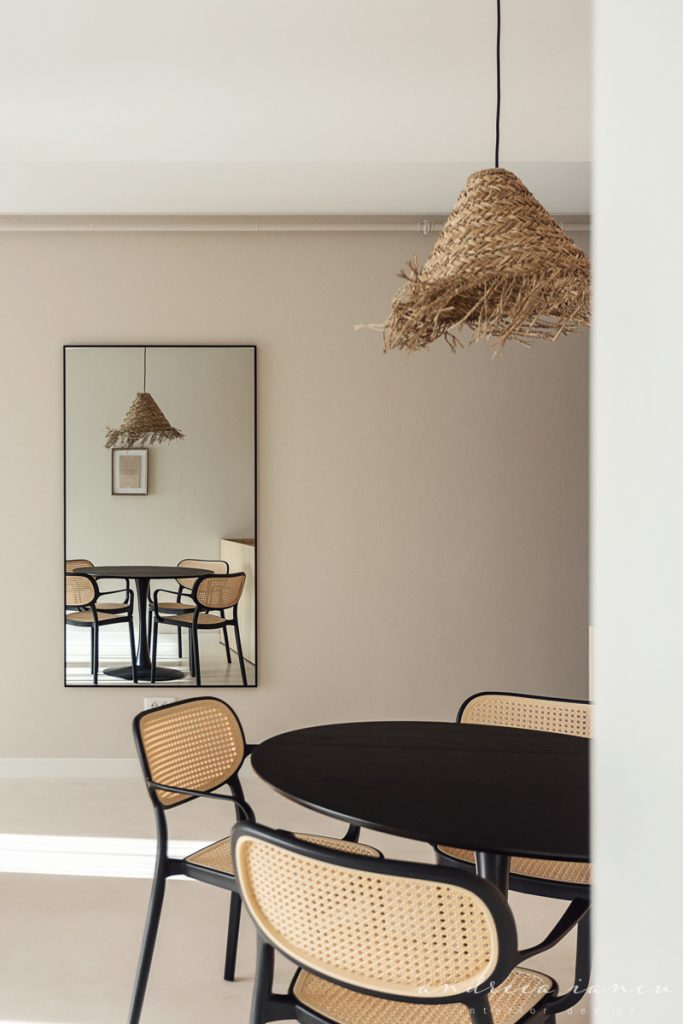
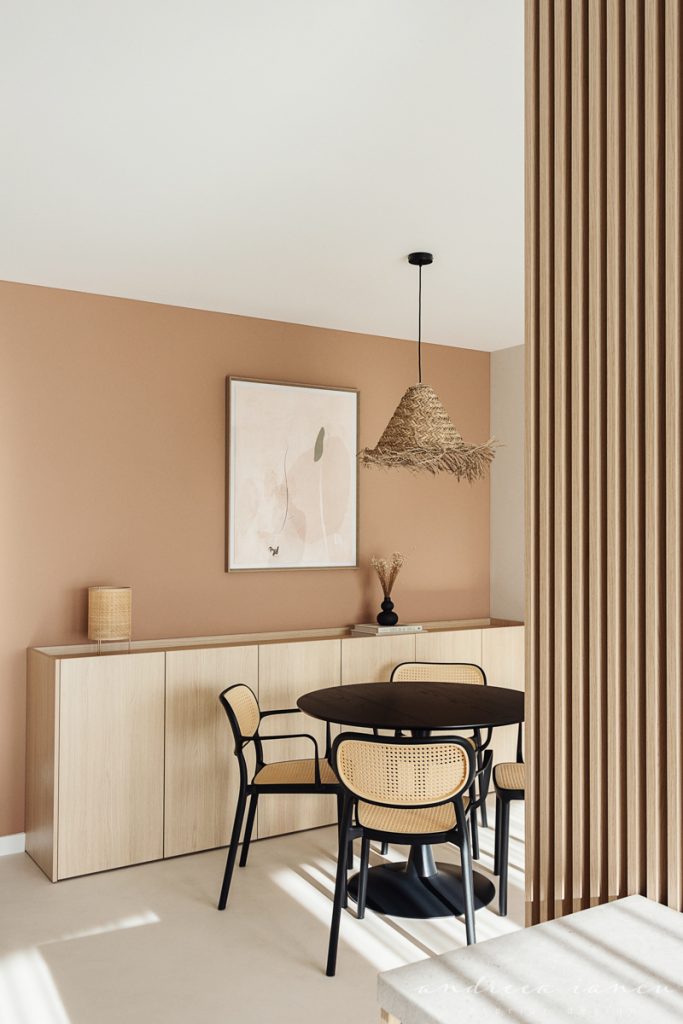
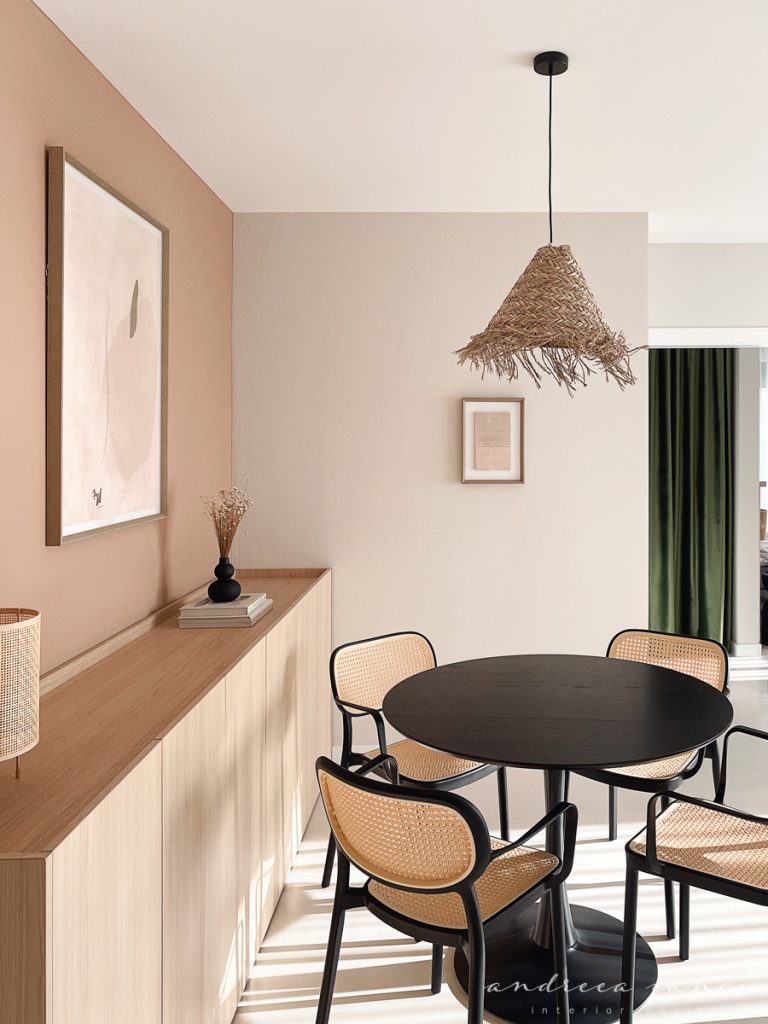
- Second, we proposed a much smaller dining table for up to 4-5 persons, in a rounded shape that fits perfectly in its new location without interrupting circulation. We opted for a fixed table, but it can surely be replaced by an extendable model if needed. Relocating the table and changing its size and shape allowed us to integrate a slim storage unit along the wall, which also discreetly conceals the underfloor heating control panel, while remaining easily accessible.
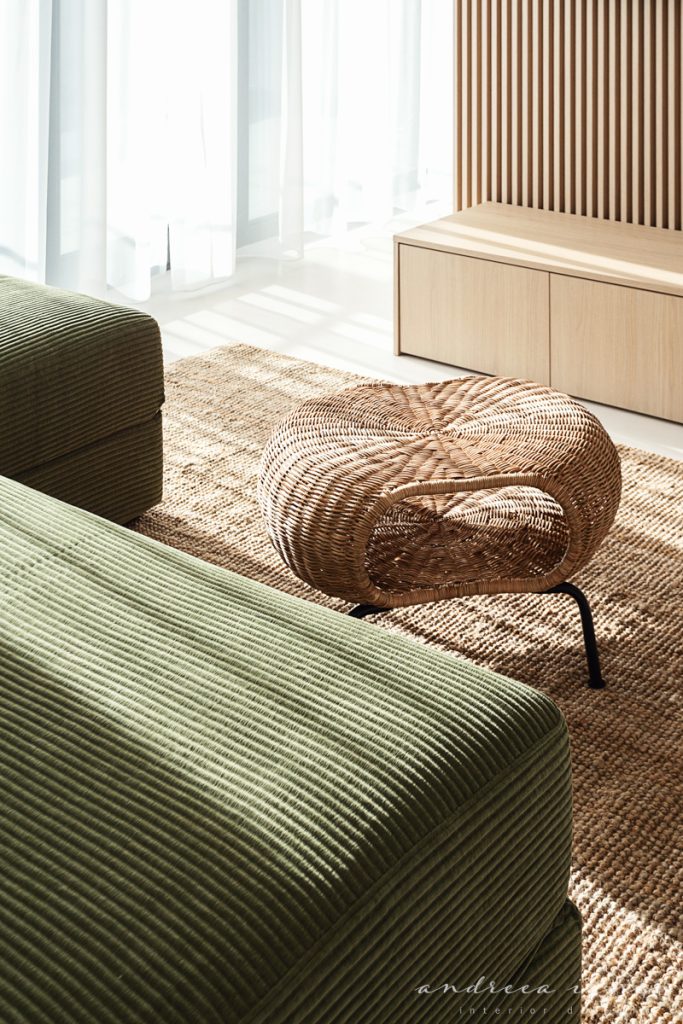
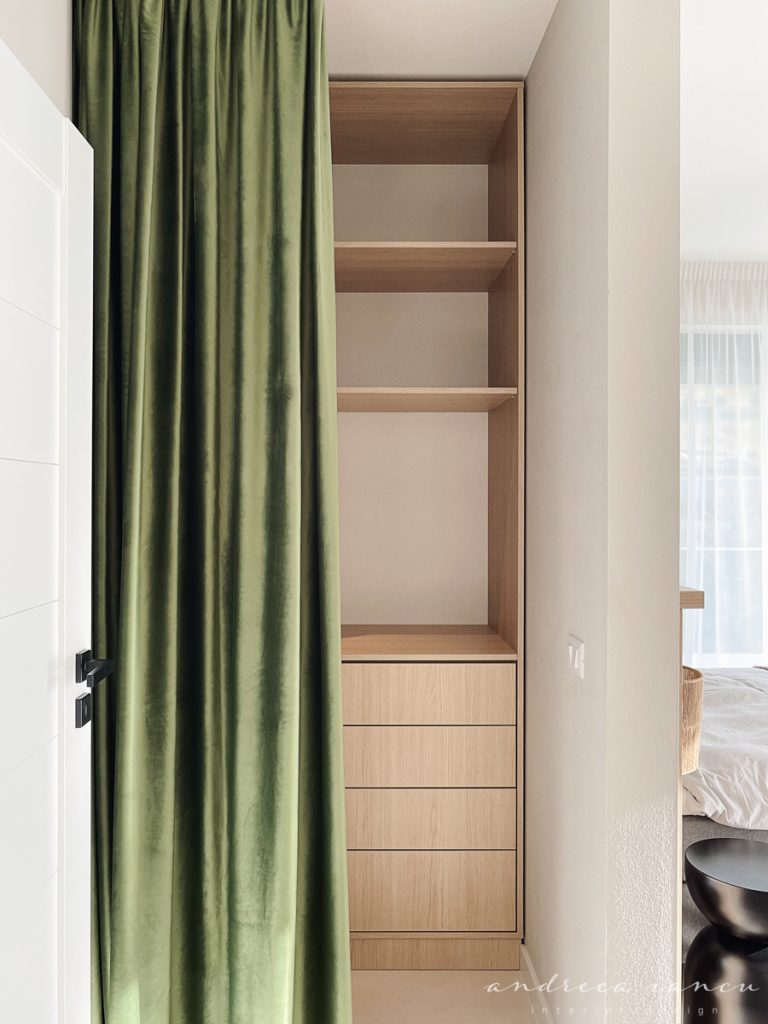
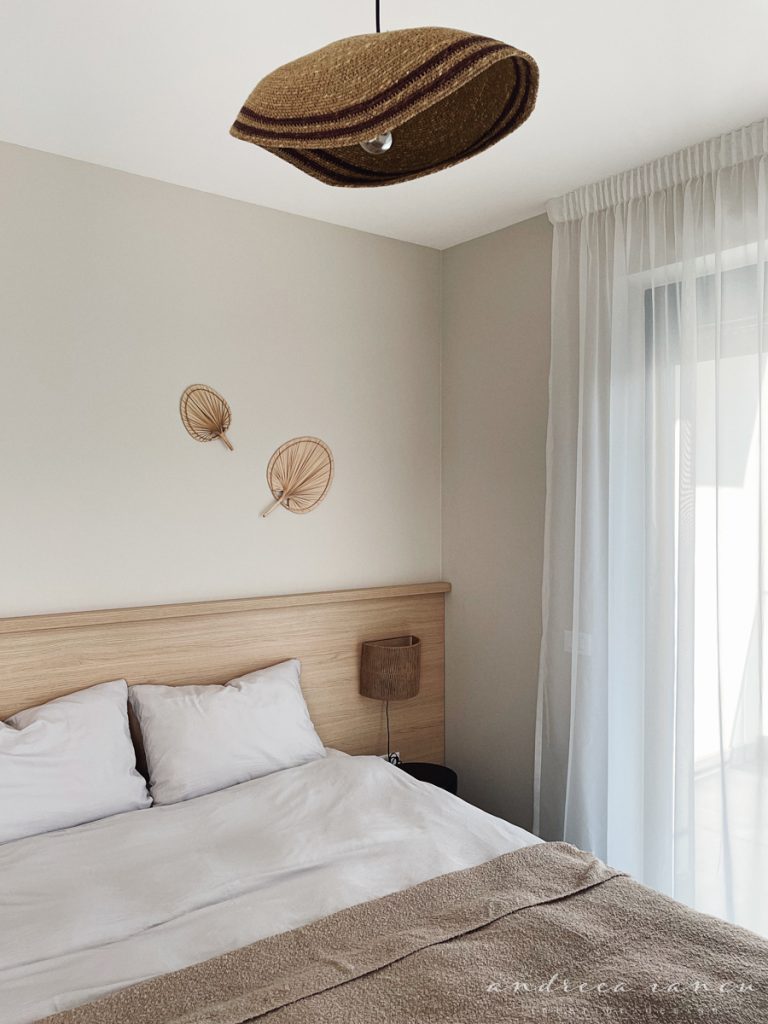
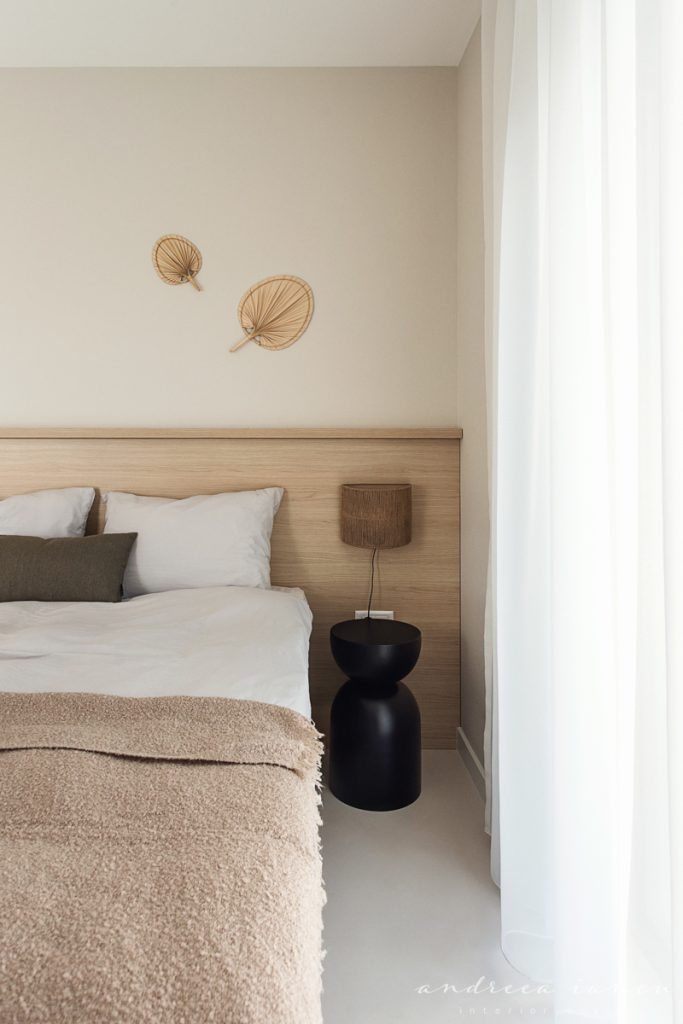
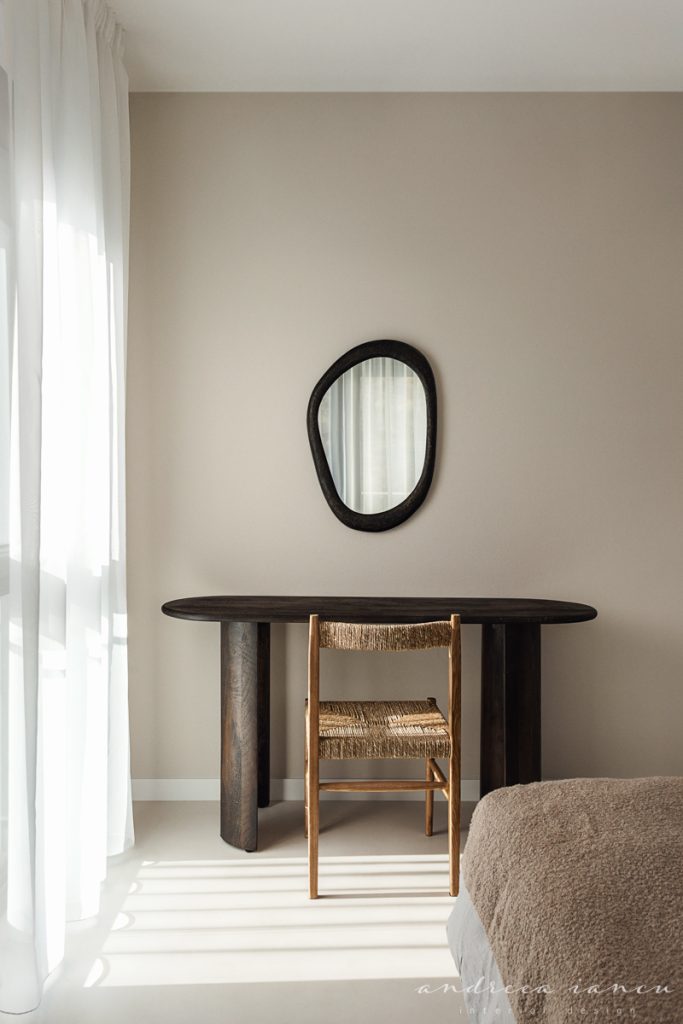
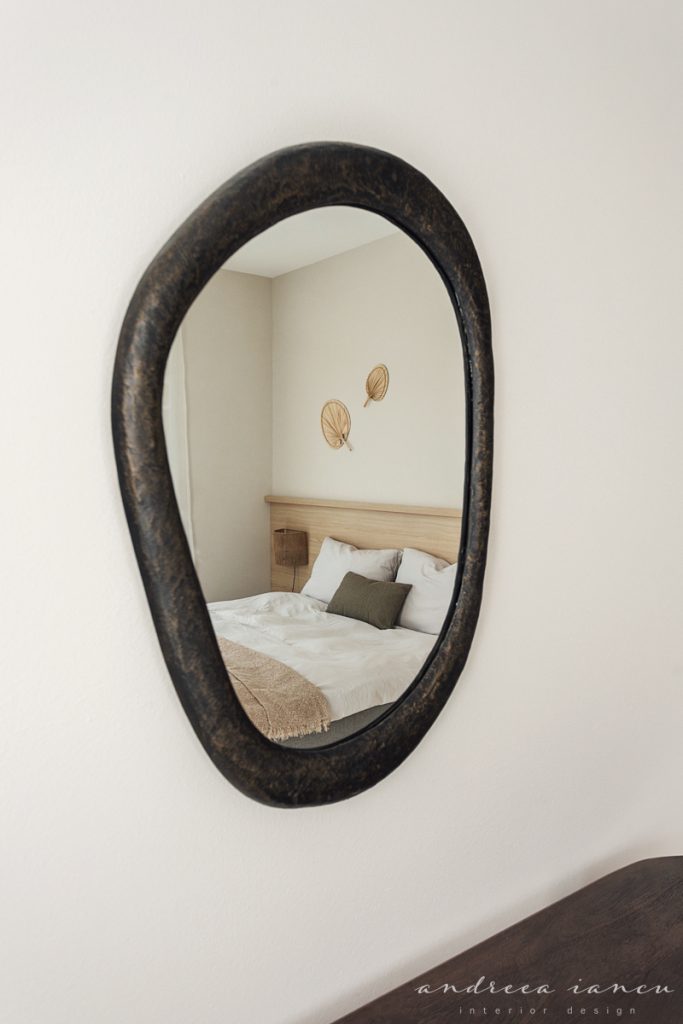
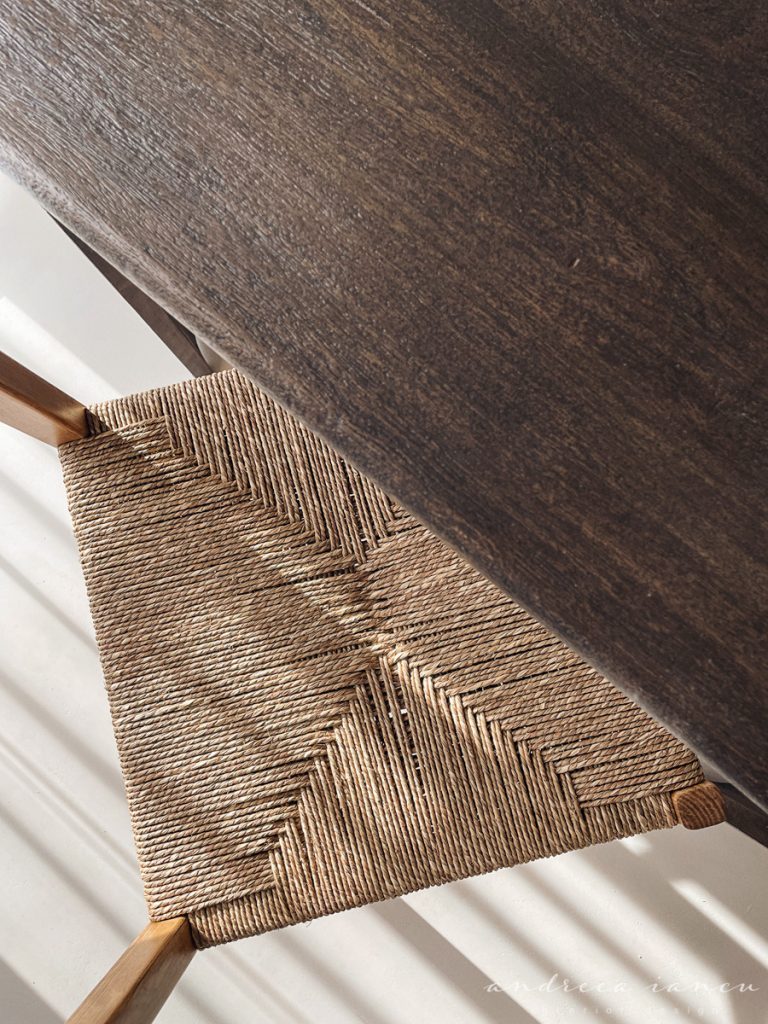
As for the looks and atmosphere, we chose a light sand-colored microcement floor throughout the whole apartment for unity and enhance the feeling of a larger space. Wood texture was used to add warmth, combined with natural materials like jute and wicker for a relaxed, summery, beach-inspired feel.
Our goal was a warm and welcoming yet minimalist interior, where every object and design gesture has a clear purpose and function, and nothing feels unnecessary.